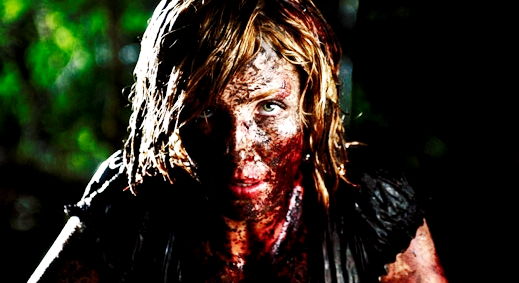
These are some of the pictures taken of us filming some scenes of our trailer:
Sunday, 25 December 2016
Thursday, 22 December 2016
Monday, 19 December 2016
Test Shots
These were the test shots of the actors, before we started filming. Even though the location isn't the same as where we're actually going to film, we still took shots of scenes we may want to include in our trailer:
Friday, 16 December 2016
Thursday, 15 December 2016
Monday, 12 December 2016
Scripting for Trailer
Script
*Date, time and place appear on a blank screen*
Investigator
(Male voice-over): “A 28 year old woman has been found brutally
murdered and burnt in her 3 bedroom house. Witnesses heard screams and shouting
from the house near midnight and later saw a man, known to be her husband,
leaving the house. The woman’s husband has been suspected of this crime as he
hasn’t been seen by neighbours since the incident took place. The woman has
been identified as Mary Christenson and police have taken the decision to seal
the house until further investigations.”
*Present date, time and place*
Eva: “This is it
guys. Our new lives begin here”
Syeda: “Yeh, we’re
finally independent”
Alina: *Tour of
the house with hand-held camera with one friend ‘making a movie’*
“Hey guys, look here. So, this is the first day in our new house.”
Gaya: “This house
is really weird... none of the lights turn on”
*Friends having a pillow fight*(music changes)
*Toilet scene* (candles blow out)
Gaya: ‘guys, the
candles blew out and I can’t open the door.
*see’s a silhouette and screams* (jump scare)
Eva: “Are you
okay?”
Alina: “Something
in this house isn’t right”
*Monstrous feminine talking in another language and scratching
walls*
*Going out for pizza*
Syeda: “aren’t you going to come with us?”
Gaya: “I can’t
leave her.”
*Possession takes place. Nun is called and religious speech is
said*
*Screams and character 1 gets killed*
*Monstrous feminine drags body into a dark room*
Eva: *humming a
song and looking through cupboard*
*monstrous feminine walks behind Eva and strangles her*
Alina: “guys,
what’s taking you so long?”
*goes downstairs in the kitchen and see’s monstrous feminine
eating something*
*Character 3 screams and retaliates*
*nun comes in and character 3 says “she owns our soul”*
*She does rituals but the spirit is too strong
and Nun gets possessed *
Thursday, 8 December 2016
Monday, 5 December 2016
Friday, 2 December 2016
Wednesday, 30 November 2016
Sunday, 27 November 2016
Friday, 25 November 2016
Thursday, 24 November 2016
Wednesday, 23 November 2016
Tuesday, 22 November 2016
Sunday, 20 November 2016
Thursday, 17 November 2016
Research Rationale - Audience Reactions
This is a video on reactions on some of the audiences from my target audience. The first film trailer shown was of 'The Suffering', which is a mystery/thriller and the second one was 'The Devil Inside', which was a paranormal/exorcism. This research was carried out in order to find out which horror sub-genre, they reacted to the most. The results showed that the scenes which evoked the most reactions were jump scares, as seen in the video above. Also, another factor which created discomfort among the audience were scenes in which there was absolute silence. In my opinion, these scenes were quite effective as the silence added suspense and caused the viewers to feel uneasy, as they were aware that something is about to happen. Therefore, taking these aspects into consideration, we decided to choose exorcism/paranormal as our sub-genre and include these features in our own trailer, in order to make it more professional and mostly, to scare our viewers.
Here are the participants with their consent forms:
Sunday, 13 November 2016
Research Rationale - Market Research
As an additional part of my research rationale, I decided to look online for news articles which showed, why people chose to watch horror films, aspects of horror which were effective and also, people's comments regarding which horror films they liked and what they thought about horror in general.
The article above suggested that younger people were more likely to watch a modern horror than the older generation, as they were more "visually literate". By this it meant that younger audiences were able to better process the quick changes between scenes, as they had the understanding that the film was artifice. According to Dr. Lewis, who is a psychologist, he thinks that "scary films have become so popular because we feel the need to return to our cavemen-like state when we experienced genuine fear, which releases 'feel-good hormones' like dopamine and adrenaline. Our modern lives are so dull that we have to look for an artificial re-placement". This implies that the production of horror films can serve several purposes to the public as they provoke startling responses which cause the essential hormones to be released, in addition to their main function, which is to simply entertain. Also, it has been mentioned in the article that film makers use psychological tricks to provoke these responses, which could be done through the sound, mise-en-scene, camera work and angles. This results in creating feelings of terror and can stimulate both psychological and physical reactions, for example, loss of sleep and feeling sick.
The article also consisted of comments given by random people, in regards to what they thought of the article and how they feel about horror films. This is very useful as I was able to gain responses of anonymous people, which meant that could give their opinions freely and without being influenced by others. Some examples of the views of others were:
By analysing some of these comments, I was able to figure out the type of films that most viewers enjoyed watching. I feel that the comments were helpful as they helped me understand the type of sub-genre I would want my production work to be based on, as well as giving me an idea of what type of setting. props, characters and monster I would want to include.
Tuesday, 8 November 2016
Saturday, 5 November 2016
Thursday, 3 November 2016
Wednesday, 2 November 2016
Monday, 31 October 2016
Sunday, 30 October 2016
Saturday, 29 October 2016
Horror Prelim. Construction
For our clip, we decided to subvert from the original film clip as we chose to portray the characters of a brother and sister, whereas in the film clip, the characters of a mother and daughter are used. We did this mainly because as we used actors that we were easily able to access. We decided to use Aamina's house as the location for all our shooting, as her house replicated the one we saw in the original clip. Also, this was a good location as we were all able to meet up easily, as well as the actors.
Constructing our scene was more challenging than we thought as we came across a few problems. Initially, we had thought that if we follow our shooting schedule, we would be able to get the whole scene shot in that time. However, this didn't go to plan and we ended up spending a total time of 4-5 hours, completing the shooting. This was mainly due to the retakes we had to do for some of the shots, as we wanted them to look exactly like the film clip. Also, the part where the wardrobe door opens, we had initially thought of opening the doors with strings, however this did not go to plan as the strings were visible and would not open the doors as they were too heavy. Despite this problem holding us back, we overcame it due to improvising as Aamina went inside the wardrobe and would open the doors form the inside, when needed. One of the major problems we encountered was the lighting as when we started the shooting, only natural light was coming in the house, which resulted in the lighting looking similar as though in the original clip. However, as we had to retake the banister scene a few times, by the time we got to shooting the wardrobe scene, it had got dark outside and therefore we had to turn the lights on. This heavily affected the outcome of our final clip, as the transition from the banister scene and the wardrobe scene evidently shows the drastic change in lighting. Regardless of these issues, our construction went very well as everyone had an input of how we could make the shots look better.We also used a tripod in some of the scenes, however, the majority of our clip used handheld shots, as these were the shots we noticed in the original clip. While filming the whole clip, everyone in the group was able to have a go at shooting a part of the scene, so that we all knew how to use a camera for recording and also because we wanted everyone to have an equal role in the construction of the clip. In our clip, I shot the scene in which the character is walking towards the wardrobe, using a front view tracking shot. We thought that including this would be effective not only because it was used in the original clip, but also because it helps create suspense due to it looking like the character is trying to grab something.
Finally, in order to edit our footage, we used Premiere to create our final clip. We did this by transferring all our footage onto the system and putting all the shots together. We included lots of transitions from one scene to another, as well as including a variety of special effects and the original soundtrack of the film in the background. We did this as it would make our clip match the original, as well as provoking an intense atmosphere for our viewers. Finally, we uploaded our completed work onto YouTube.
Thursday, 27 October 2016
Horror Prelim. Planning: Shooting Schedule
In order to for us to plan when we should start shooting for our clip, we decided to come up with a timetable which illustrated all the hours of the school day we had free. The yellow boxes indicated the free periods that some of our group members had, in which they could get the resources ready and start filming. The green boxes highlighted the free periods which all of us had free, and lastly, the purple boxes showed all the media lessons we had over the 2 week timetable, which we could use to construct our clip. This was very helpful for us as we could use it to clearly see the times that we were able to shoot, as well as keeping us organised.
This is the shooting schedule we made which distinctly shows the amount we wanted to spend on each of the shots. As we had already timed out how long each scene was of the original clip, we wanted our clip to be the same length, in order to make it look as similar as possible. In this, the use of camera angles and mise-en-scene is stated in more detail than in the storyboard. This was also a useful resource, as we knew exactly what we had to do and what camera angles had to be used for each scene.
Wednesday, 26 October 2016
Horror Prelim. Planning: Storyboard
To plan how and what we're going to do in our preliminary task, we firstly decided to create a storyboard, and jot down our ideas as to what we would want to include in the clip. To make our clip similar to the original, we timed each shot to keep the length of the scene, the same. We also included a brief description about how we would want the mise-en-scene, lighting and sound to be in order to make the overall video seem like the original. All the members of our group made inputs to what should be included in the scene and how it should be shot. This resulted in us having a range of ideas and helping us become prepared for what we had to do.
Saturday, 22 October 2016
Analysis of Horror Clip
For our preliminary task, we chose to recreate the clap scene from the film, ‘The Conjuring’ as we thought that it would be easy to recreate and film in a house. The camera work in this clip is mainly handheld, which makes the overall scene very effective, as it helps to create suspense and prompt that something is about to happen. The lighting of the scene, in general, is quite dark as we can only see the natural light from outside, in the house. This helps to create a ghostly atmosphere and intrigue the audience, into assuming that something is likely to jump out and scare us. In the first scene of the clip, the use of a long shot makes us focus on the character, which enables us to think that something may happen to her. The character is shown to be blindfolded, which adds creates more anticipation, as we are aware that she is unable to see anything, and therefore, something is likely to occur. The next shot consists of a tracking shot, which follows the character as she enters the next room. The sounds we hear in the background is diegetic sound of a gong of a clock. This is effective as before we hear this sound, there is absolute silence. In the next shot, we see the woman walk into the room and having her back towards the cupboard. The mise-en-scene of this shot is very minimal, as this helps keep the audiences view of the character and the cupboard. Also, the lighting in the room isn't fairly bright, as there is only natural light coming in the room. The camera work in this shot starts its focus on the character and then, focuses on the cupboard. This is effective, as it makes clear what the director wants us to look at. A lot of shadows have also been used in this part of the scene, in order to create an uneasy atmosphere. We see a lot of medium and close-up shots as the woman walks towards the cupboard, as this makes the audience keep their focus on the character and add suspense. As the woman is walking, we hear a soundtrack in background, slowly fading into the scene. By the time she reaches the wardrobe, the volume of the soundtrack increases, in order to stimulate fear. Towards the end of the shot, a close-up is used in order to focus on the change of expression of the character as she looks quite happy. However,as she gets closer to the wardrobe, her expression changes as she lifts up the blindfold as seems shocked.
https://www.youtube.com/watch?v=HrFT6L4jxdI
This is the link of the original clip of the film.
Wednesday, 19 October 2016
Wednesday, 12 October 2016
Scream (1996)
‘Scream’ is another slasher
film directed by Wes Craven, who also directed ‘Nightmare on Elm Street’. The story consists of a serial killer known
as ‘Ghost face’, who calls girls and threatens them, before murdering them. The
narrative starts off by showing the murder of two teenagers, a boy and girl,
which causes their school to be closed, in order to investigate the cause of
their death. However, this leads onto a chain of recurring murders.
Scream conforms very well to the typical rules of a slasher film,
as to how the characters can survive from the killer. For example, the concept
they shouldn’t have sex, drugs, alcohol or say “I’ll be back”. The film is
combined with comedy, as well as with the violence of the slasher genre, as
Craven wanted to satirize the cliché of the horror genre. This relates to
Todorov’s argument that “a new genre is always the transformation of one or
several old genres”. The film was considered unique at the time, as it featured
characters who were aware of the real world horror films and openly discussed
the cliché that scream tried to subvert. This refers to Steve Neale’s claim
that “genres are instances of repetition and difference”. This film also follows
the conventions of the concept of a slasher film, as it is mainly to do with Innocence
vs. Sexuality. Like other slasher films,
there is also an iconic weapon used, which for this instance is a knife, which
was also used in Halloween (1978).
This leads onto the Final Girl theory by Clover (1992), which specifically
refers to the last woman or girl alive to confront the killer, and the one who
is apparently left to tell the story. According to Clover, the final girl shares
common characteristics as she is typically supposed to be sexually unavailable
or a virgin, who avoids the vices of the victims, for example, sex, illegal drug
use, alcohol consumption etc. However, in Scream we encounter subversion to
this as towards the end of the film, Sidney has sex with her boyfriend and
therefore, no longer stays a virgin. Despite this, she still manages to be the
final girl and confront the killer and survive. Also, according to Clover, the final girl
tends to have a unisex name, which the film follows, as the main characters
name is Sidney. Another claim made by Clover is that the final girl may likely
have a shared history with the killer which, in Scream, is revealed in the end.
This is because Sidney’s mum is killed by her boyfriend as his dad was having
an extra marital affair with Sidney’s mum. We also come across a similar scenario
in Scream 3, where the killer is revealed to be Roman Bridger who is
half-brother of the sole survivor, Sidney Prescott.
Tuesday, 11 October 2016
Clover's Final Girl
The concept of the “Final Girl” was created
by Carol Clover which implied the last character left alive in the slasher
movie, to confront the killer. A certain set of characteristics is followed, which
the first and most obvious one is being a female. Other characteristics are
that she would most likely be a virgin and remain fully clothed in the film;
she’d avoid sex and probably won’t drink alcohol, smoke or take drugs. Also,
she would be the most intelligent one out of the victims and would therefore, survive
the horror.
Typically, in films, women are portrayed as
being weak and fearful characters and are viewed as a damsel in distress who
always needs to be saved. They are stereotyped as a sex symbol and are portrayed
to the audience from the male perspective. Furthermore, they are mostly shown
to not make it to the end of the film without the help of a man, who are
supposedly shown superior as compared to women. However, the Final Girl theory
represents some women as strong and smart and has the characteristics of a male
hero. These characters, who survive the whole film, while all the other
victims, including the men are all killed, tend to be sexually unavailable and have unisex names. This is known as the Clover’s Final Girl
theory.
Some examples of the Final Girl in some
horror films are:
Nancy Thompson - Nightmare on Elm Street
Monday, 10 October 2016
Sunday, 9 October 2016
Saturday, 8 October 2016
Levi-Strauss' Binary Oppositions Theory
A binary opposition is a pair of related
terms or concepts which are opposite in meaning.
Claude Levi-Strauss was a French anthropologist
who lived in the early 1900s. He argued that the way we understand certain
words doesn’t depend on any meaning they themselves directly have, but mostly
by our understanding of the difference between the word and it’s ‘opposite’, or
as Strauss referred to it as ‘binary opposite’. For example, our perceptive of
the word ‘rich’ depends on the difference between that word and the contrasting
word ‘poor’. Binary opposites are used frequently in media text and many action
genre films utilise binary opposition in their films.
Some examples of binary opposites are:
- · Man/woman
- · Good/bad
- · Young/old
- · Hero/villain
Thursday, 6 October 2016
Monday, 3 October 2016
Sunday, 2 October 2016
Friday, 30 September 2016
Wednesday, 28 September 2016
Horror Theories (in brief)
Propp's Narrative Functions:
Vladimir Propp was a Russian and Soviet formalist scholar. He suggested that there were 8 main character types. The emphasis was on looking at characters not as representing real people, but as functions whose role was to move the narrative forward.
- Hero - seeks something
- Villain - opposes hero
- Donor - helps hero providing magic object
- Dispatcher - sends hero on his way
- False hero - falsely assuming role of hero
- Helper - gives support to hero
- Princess - reward for hero
- Father - protects princess
Todorov's Basic Narrative Theory:
Equilibrium -----> Disequilibrium -----> New equilibrium
- State of equilibrium
- Disruption of equilibrium by some action
- A recognition that disruption has caused
- An attempt to repair
- Reinstatement
Aristotle:
Tragedy is a representation, not of men, but of action and life, of happiness and unhappiness - and happiness and unhappiness are bound up with action. ( All about conflict)
Levi- Strauss' Binary Oppositions:
All narratives had to be driven forward by conflict that was caused by a series of opposing forces - binary oppositions.
Monday, 26 September 2016
Sunday, 25 September 2016
Thursday, 22 September 2016
Eden Lake
Eden Lake is a
paranoid horror. The threat that the youths present is nearby as they live in
the area and know it much better than Jenny and Steve. As Steve tries to
communicate with the youths, he is unsuccessful in his attempts to ask them to
be more considerate with them, rather than harass him and Jenny by offensive
actions and loud music. The audience is easily able to identify the victims of
this film, as Jenny is portrayed as a very feminine woman, whereas the male
protagonist, Steve, is the typical male. Due to the signs of warning e.g. the
Sat Nav voice telling them to turn around, the audience is aware of the tension
build up.

The female character, Jenny, is introduced as being very feminine and vulnerable. Jenny and her partner Steve go on a romantic weekend away at an abandoned quarry, which is situated in a very isolated setting. They also come across a little boy who is playing alone in the woods. The audience starts to feel the rising tension from when the dog barks at the couple on the beach, hearing noises from outside of the tent on their first night and then they puncture the car tire due to a bottle placed underneath. Also, when the couples try to track down the kids, they offend a mother in a cafe, which is a very threatening scene and gives an insight into the culture of the area.
The kids are easily recognised by the audience as the villains in this film, as they are shown to be the bad youth that British audiences can identify with. The setting also helps to recognise the film as a horror, as it is set in a large populated place, which is shown from a bird’s eye view when the couple first arrive. Icons such as knives, the blood, the injuries to the characters and also, the changes that cause Jenny to turn from innocent to monstrous also help to create fear and anxiety for the audience.

Within Eden Lake, the character whose gender is represented very blatantly is Jenny, as she is in the first scene teaching young well behaved children in a very feminine, flowery dress. Though eventually, the more injured and bloodied and dirty the characters got, the more the roles reversed as it suddenly became the woman's job to help the man survive. This develops the narrative in a way that causes audiences to be intrigued as she is no longer playing the damsel in distress role we were first expecting.
The binary opposite of social classes is shown within the very first scenes of Eden Lake when the couple leave the middle class area, where Jenny's school is, and end up staying at a small bed and breakfast. The locals are shouting at all hours of the night; the children are misbehaving and being smacked, which is a complete opposite to the well behaved children in her class. By entering into a working class area, the characters of the teens are seen as being terrible from first look, as most audiences would immediately come to the conclusion they aren't well educated and don’t really follow the law.

The female character, Jenny, is introduced as being very feminine and vulnerable. Jenny and her partner Steve go on a romantic weekend away at an abandoned quarry, which is situated in a very isolated setting. They also come across a little boy who is playing alone in the woods. The audience starts to feel the rising tension from when the dog barks at the couple on the beach, hearing noises from outside of the tent on their first night and then they puncture the car tire due to a bottle placed underneath. Also, when the couples try to track down the kids, they offend a mother in a cafe, which is a very threatening scene and gives an insight into the culture of the area.
The kids are easily recognised by the audience as the villains in this film, as they are shown to be the bad youth that British audiences can identify with. The setting also helps to recognise the film as a horror, as it is set in a large populated place, which is shown from a bird’s eye view when the couple first arrive. Icons such as knives, the blood, the injuries to the characters and also, the changes that cause Jenny to turn from innocent to monstrous also help to create fear and anxiety for the audience.
Within Eden Lake, the character whose gender is represented very blatantly is Jenny, as she is in the first scene teaching young well behaved children in a very feminine, flowery dress. Though eventually, the more injured and bloodied and dirty the characters got, the more the roles reversed as it suddenly became the woman's job to help the man survive. This develops the narrative in a way that causes audiences to be intrigued as she is no longer playing the damsel in distress role we were first expecting.
The binary opposite of social classes is shown within the very first scenes of Eden Lake when the couple leave the middle class area, where Jenny's school is, and end up staying at a small bed and breakfast. The locals are shouting at all hours of the night; the children are misbehaving and being smacked, which is a complete opposite to the well behaved children in her class. By entering into a working class area, the characters of the teens are seen as being terrible from first look, as most audiences would immediately come to the conclusion they aren't well educated and don’t really follow the law.
Subscribe to:
Comments (Atom)